

5 x 7 Beige Vintage Turkish Oushak Rug 53070
5 x 7 Beige Vintage Turkish Oushak Rug 53070
Add Rug Pad
Only 1 left in stock: Shipping in 2-5 days
Rug Details
Delivery / Returns / Payment
Shipping Insured worldwide delivery. Most in-stock rugs leave our Dallas warehouse within 2 business days.
Returns Item must arrive in the original condition with tags attached. Return freight & insurance are the customer’s responsibility. We accept:
● 10-day returns for standard purchases
● 3-day returns for promotional-sale items
Refunds exclude outbound shipping & handling.
Payment Checkout online with all major cards, or call (214) 651-7847 to pay by phone. Checks are welcome; we ship once funds clear.
Trade Clients Qualified trade accounts may request rugs on approval—simply choose “Trade Approval” at checkout and we’ll arrange two-way logistics.
Care Instructions
● Vacuum with the beater bar off and always in the direction of the pile.
● Rotate 180° every 6 months for even wear and sun-fade balance.
● Blot spills immediately with a white cloth—never rub.
● Use a breathable rug pad to prevent slipping and fiber stress.
● Schedule a professional hand-wash every 3–5 years (sooner for high-traffic or pets).
Need in-depth guidance? See our full Rug Care Guide.


Inquiry
Please send us a message for pricing and questions regarding this product!
Description:-
53070 Vintage Turkish Oushak Rug, 05'06 x 06'09.
The Nomadic Archive: A Vintage Turkish Oushak Masterpiece of Anatolian Symbolism
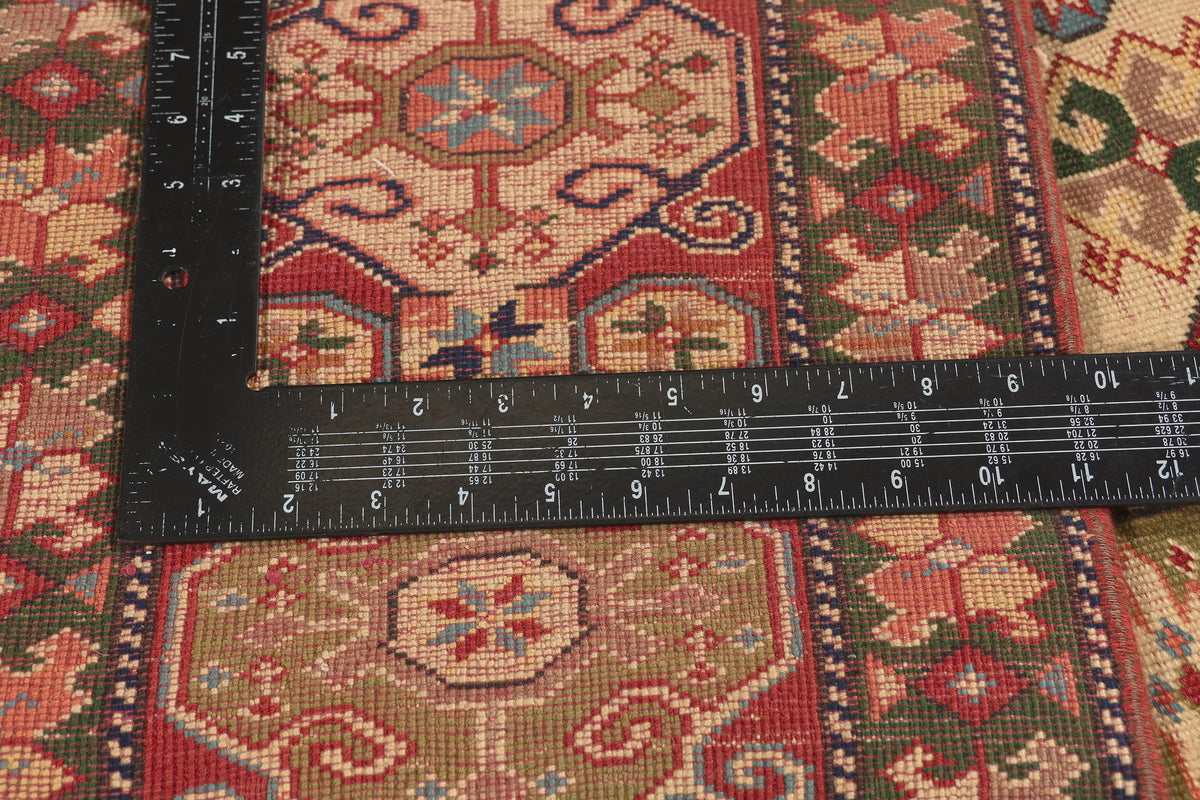
This hand-knotted wool vintage Turkish Oushak rug presents a remarkable synthesis of Anatolian weaving and the geometric vocabulary associated with Caucasian tribal carpets. The field is organized with almost ceremonial precision, its repeated medallions and talismanic devices creating the impression of an ancestral archive rendered in wool. Dense ornamentation gives the exceptional composition a prestigious presence, while the disciplined symmetry speaks to a weaving culture in which pattern served as both decoration and a language of identity, protection, and continuity.
A succession of elongated hexagonal medallions commands the field, each enclosing angular devices that recall stylized ram’s horns and hooked amulets. In Anatolian symbolism, the iconic ram’s horn motif represents strength, fertility, courage, and masculine power, while hooks were traditionally associated with safeguarding against harmful forces. Between these principal forms appear eight-point stars, rosettes, diamonds, crosses, and abstract emblems, transforming the ground into a constellation of auspicious signs. The eight-point star has long been linked with harmony and spiritual order, lending another layer of meaning to the intricate arrangement.
Smaller motifs create an elaborate network around the medallions, producing the visual richness prized in collectible village weaving. Diamonds can signify fertility and the generative principle, while rosettes evoke beauty, renewal, and the cyclical flourishing of nature. Cross-like devices and angular hooks reinforce the protective character of the composition. Their repetition creates rhythm without surrendering individuality; subtle variations reveal the hand of the weaver and preserve the human character that gives vintage Oushaks their enduring appeal.
The field is surrounded by a commanding sequence of borders, culminating in a broad procession of octagonal medallions, rosettes, hooked forms, and geometric amulets. Narrower guard bands establish additional layers of symbolic enclosure, giving the rug the character of a protected precinct whose imagery is held within successive boundaries. This sophisticated architecture, coupled with its profusion of tribal signs, makes the extraordinary masterpiece especially compelling for a connoisseur seeking an Oushak with graphic authority, cultural depth, and unmistakable provenance of spirit—an exquisite work of art whose luxury resides in heritage, craftsmanship, and the rarity of its visual language.
- Abrash.
- Hand-knotted wool.
- Made in Turkey.
- Measures: 05'06 x 06'09.
- Date: 1940's. Mid-20th Century.