
Color, Pattern, and Tactile Character
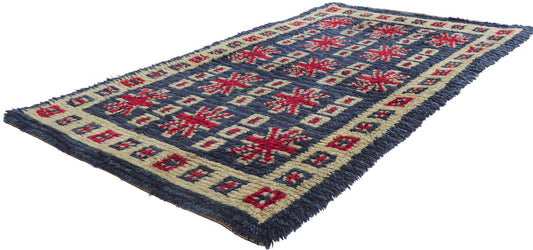
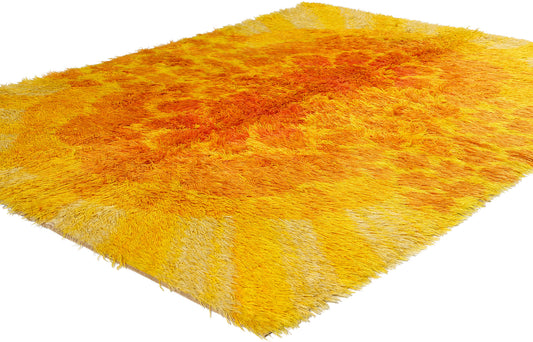
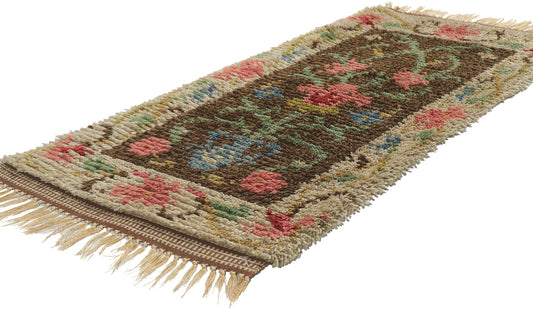
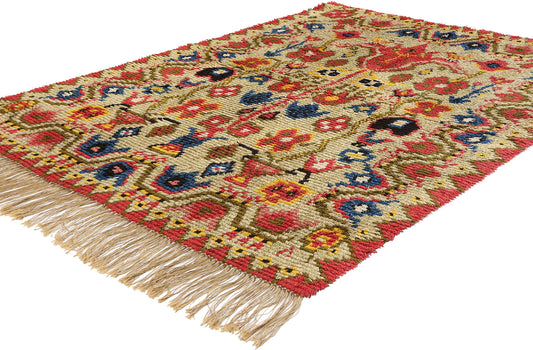
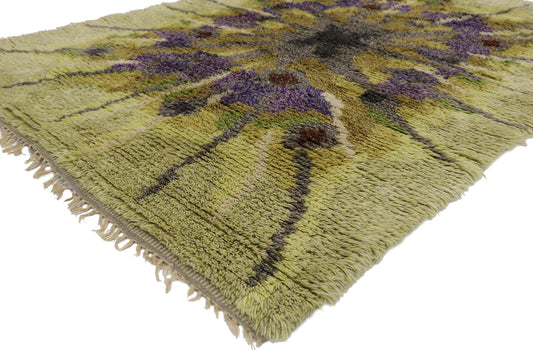
Scandinavian rya rugs may feature geometric forms, abstract compositions, or fields of blended color. Their longer pile can soften sharp architectural lines and introduce depth beneath wood, leather, stone, and natural fabrics. The surface may also reveal shifting tones as light moves across the room.
Vintage rya rugs often suit mid-century, contemporary, and collected interiors. The Scandinavian Rugs collection at Esmaili Rugs includes vintage rya rugs by notable textile designers Viola Gråsten and Marianne Richter. Danish rya floor coverings produced by Ege Tæpper during the 1960s and 1970s, known as Ege Rya, are also iconic examples of the style.
Choosing Rya Rugs for Your Interior
When selecting rya rugs, begin with room dimensions, furniture placement, and expected traffic. A generous piece can anchor a living area or bedroom, while a smaller textile may define a reading corner, entry, or private office without competing with nearby furnishings.
Pattern scale also shapes the effect. Bold Scandinavian rya rugs can become the room’s central artwork, while quieter designs establish warmth beneath more expressive furniture. Always review pile, materials, age, and previous restoration before choosing a piece for regular use.