

12 x 11 - Rust Antique Turkish Oushak Rug - 79919
12 x 11 - Rust Antique Turkish Oushak Rug - 79919
Add Rug Pad
Only 1 left in stock: Shipping in 2-5 days
Rug Details
Delivery / Returns / Payment
Shipping Insured worldwide delivery. Most in-stock rugs leave our Dallas warehouse within 2 business days.
Returns Item must arrive in the original condition with tags attached. Return freight & insurance are the customer’s responsibility. We accept:
● 10-day returns for standard purchases
● 3-day returns for promotional-sale items
Refunds exclude outbound shipping & handling.
Payment Checkout online with all major cards, or call (214) 651-7847 to pay by phone. Checks are welcome; we ship once funds clear.
Trade Clients Qualified trade accounts may request rugs on approval—simply choose “Trade Approval” at checkout and we’ll arrange two-way logistics.
Care Instructions
● Vacuum with the beater bar off and always in the direction of the pile.
● Rotate 180° every 6 months for even wear and sun-fade balance.
● Blot spills immediately with a white cloth—never rub.
● Use a breathable rug pad to prevent slipping and fiber stress.
● Schedule a professional hand-wash every 3–5 years (sooner for high-traffic or pets).
Need in-depth guidance? See our full Rug Care Guide.


Inquiry
Please send us a message for pricing and questions regarding this product!
Description:-
79919 Antique Turkish Oushak Rug, 11'09 x 11'02.
The Anatolian Cadence: An Antique Turkish Oushak Masterpiece of Timeless Heritage
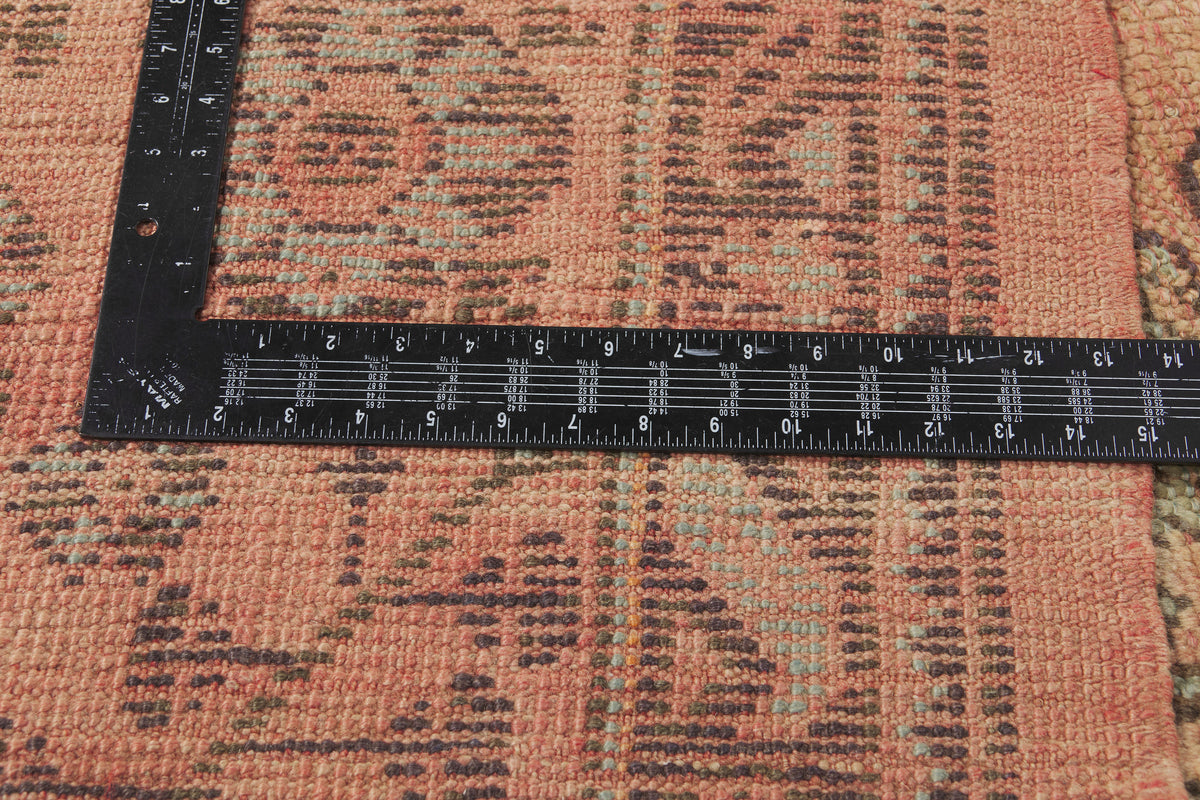
Steeped in the artistic heritage of early 20th-century Anatolia, this hand-knotted wool antique Turkish Oushak rug possesses the quiet grandeur and rustic sophistication that have made historic Oushak carpets enduring treasures of the decorative arts. Its beautifully abrashed russet field reveals a captivating interplay of faded terracotta, burnt peach, mocha mousse, and powder blue, evoking the warmth of an ancestral country residence where generations of history have left their imprint. During the late Ottoman period, Oushak weavers continued a centuries-old tradition of translating symbolic geometry and botanical ornamentation into textiles of remarkable character. These celebrated carpets had long attracted the admiration of European aristocrats, Renaissance patrons, and collectors whose interiors reflected a cultivated appreciation for Eastern craftsmanship. This stunning masterwork captures that legacy through its spacious composition, expressive tribal drawing, and time-softened surface. Its generous square proportions create an inviting foundation for interiors defined by architectural substance, natural materials, and the understated elegance of inherited furnishings.
Across the expansive field, five vertical columns establish a stately rhythm, each formed by a procession of Herati-inspired medallions, serrated palmettes, and symbolic amulets. The arrangement unfolds through alternating diamond-shaped formations and angular floral devices, creating a geometric cadence rooted in Anatolian weaving traditions. Within this ornamental vocabulary, the lozenge is frequently associated with protection, feminine creativity, and the continuity of family life, while the cruciform elements suggest spiritual balance and the symbolic division of space into four cardinal directions. Hooked extensions recall the Koçboynuzu, or Ram's Horn, iconic an ancestral emblem of masculine strength, heroism, and prosperity. These curling projections lend the medallions an almost heraldic presence, reinforcing the composition's underlying themes of guardianship and resilience. Interspersed among the principal motifs are miniature diamonds and stylized blossoms, their measured placement introducing an intimate layer of symbolism. The resulting design celebrates the relationship between geometric order and human expression, preserving the visual language of a weaving culture in which ornamentation carried meaning beyond its decorative beauty.
Flanking the central columns, an intriguing arrangement of serrated palmettes and abstract botanical formations introduces a sense of movement throughout the abrashed ground. These flowering devices recall the Tree of Life, a recurring theme in Turkish textile art representing immortality, spiritual growth, and the interconnectedness of earthly existence. Their branching silhouettes suggest the regenerative forces of nature, while the accompanying angular leaves evoke endurance and the perpetual renewal of the seasons. Smaller cruciform emblems and protective devices appear nestled within the ornamental network, reflecting the traditional belief that woven symbols could safeguard the household against misfortune and the evil eye, or nazar. The alternating medallions establish a visual dialogue between strength and serenity, their repeated configurations suggesting continuity across generations. Subtle variations in drawing and coloration reveal the individuality of the artisan's hand, lending the carpet an authenticity that speaks to its age and cultural origins. Every ornamental passage contributes to an exceptional composition of contemplative beauty, where ancestral symbolism and architectural precision coexist in harmony.
Enclosing this extraordinary masterpiece is a distinctive rosette border, its procession of flowering medallions connected by delicate stems and miniature botanical ornaments. Within Anatolian symbolism, the rosette is often associated with the sun, happiness, and the cyclical passage of time, its radiating petals recalling the life-giving energy of celestial illumination. Double guard borders complete the framework, introducing interlocking geometric patterns that establish a protective enclosure around the interior design. The interplay of floral repetition and angular detailing lends the perimeter an understated ceremonial character, reinforcing the carpet's harmonious proportions. With its evocative patina, accomplished craftsmanship, and earthy sensibility, this antique Oushak is particularly suited to the distinguished interiors of English country houses, historic Colonial estates, and secluded mountain retreats. Envisioned beneath a substantial oak dining table, anchoring a fireside sitting room, or complementing the hand-hewn timber and stonework of an exclusive Adirondack lodge, it introduces warmth, heritage, and a sense of permanence. For the discerning collector, this magnificent acquisition offers the pleasure of procuring an exquisite work of art whose artistic character, symbolic depth, and enduring appeal reflect the legacy of Anatolia's celebrated weaving traditions.
- Abrash. Antique wash.
- Hand knotted wool.
- Made in Turkey.
- Measures: 11'09 x 11'02.
- Pile Height: 0.22 of an inch.
- Date: 1920's. Early 20th Century.


