

3 x 30 - Red Antique Afghan Turkoman Rug - 79696
3 x 30 - Red Antique Afghan Turkoman Rug - 79696
Add Rug Pad
Only 1 left in stock: Shipping in 2-5 days
Rug Details
Delivery / Returns / Payment
Shipping Insured worldwide delivery. Most in-stock rugs leave our Dallas warehouse within 2 business days.
Returns Item must arrive in the original condition with tags attached. Return freight & insurance are the customer’s responsibility. We accept:
● 10-day returns for standard purchases
● 3-day returns for promotional-sale items
Refunds exclude outbound shipping & handling.
Payment Checkout online with all major cards, or call (214) 651-7847 to pay by phone. Checks are welcome; we ship once funds clear.
Trade Clients Qualified trade accounts may request rugs on approval—simply choose “Trade Approval” at checkout and we’ll arrange two-way logistics.
Care Instructions
● Vacuum with the beater bar off and always in the direction of the pile.
● Rotate 180° every 6 months for even wear and sun-fade balance.
● Blot spills immediately with a white cloth—never rub.
● Use a breathable rug pad to prevent slipping and fiber stress.
● Schedule a professional hand-wash every 3–5 years (sooner for high-traffic or pets).
Need in-depth guidance? See our full Rug Care Guide.


Inquiry
Please send us a message for pricing and questions regarding this product!
Description:-
79696 Antique Afghan Turkoman Rug, 02'10 x 30'01.
The Tribal Emblem: An Afghan Turkoman Masterpiece of Ancestral Protection
This hand knotted wool antique Afghani Turkoman rug from the early 20th century possesses the commanding presence of a tribal heirloom, its striking runner format extending nearly thirty feet in a procession of symbolic ornament. Against the saturated madder-red field, monumental gul medallions establish a stately vertical rhythm. Meaning “flower medallion,” the gul served as far more than decoration within Turkoman culture; its distinctive configuration could express tribal identity with the visual authority of a heraldic emblem. Here, the floral geometry celebrates nature, the earth, fruitfulness, and humankind’s place within a harmonious cosmos.
Each Gul contains a dark cruciform, four-lobed floral device surrounded by angular contours in deep indigo and complementary tones. Cross and four-part formations carry associations with unity, balance, and the four cardinal directions, creating a symbolic compass within every medallion. Their stepped edges add another layer of meaning: jagged forms were traditionally understood as apotropaic devices capable of deflecting the Evil Eye and guarding against harmful forces. Repeated along the immense length, these iconic emblems create an unbroken sequence of protection, transforming the stunning masterwork into a ceremonial pathway of ancestral symbolism.
Between the principal guls, smaller branching motifs punctuate the field while striking blue forms project inward from the sides, lending the composition a powerful architectural cadence. The disciplined alternation of ornament reflects the visual language associated with Turkoman weaving, where repetition could communicate continuity, lineage, and collective memory. Rich red conveys vitality and prestige, while indigo introduces depth and spiritual resonance. The narrow proportions intensify this procession, allowing each emblem to emerge as a successive marker along an exceptionally dramatic expanse.
A distinguished palmette border encloses the extraordinary masterpiece, its recurring flowerheads carrying associations with flourishing life and enduring abundance. Meandering guard borders create successive protective boundaries, metaphorically containing the blessings expressed within the field. With its remarkable scale, graphic clarity, and deeply rooted iconography, this antique Turkoman runner offers the collector an imposing piece of nomadic heritage—an exquisite work of art whose rarity, provenance, and monumental proportions give it the presence of a true statement acquisition.
- Abrash.
- Hand knotted wool.
- Made in Afghanistan.
- Measures: 02'10 x 30'01.
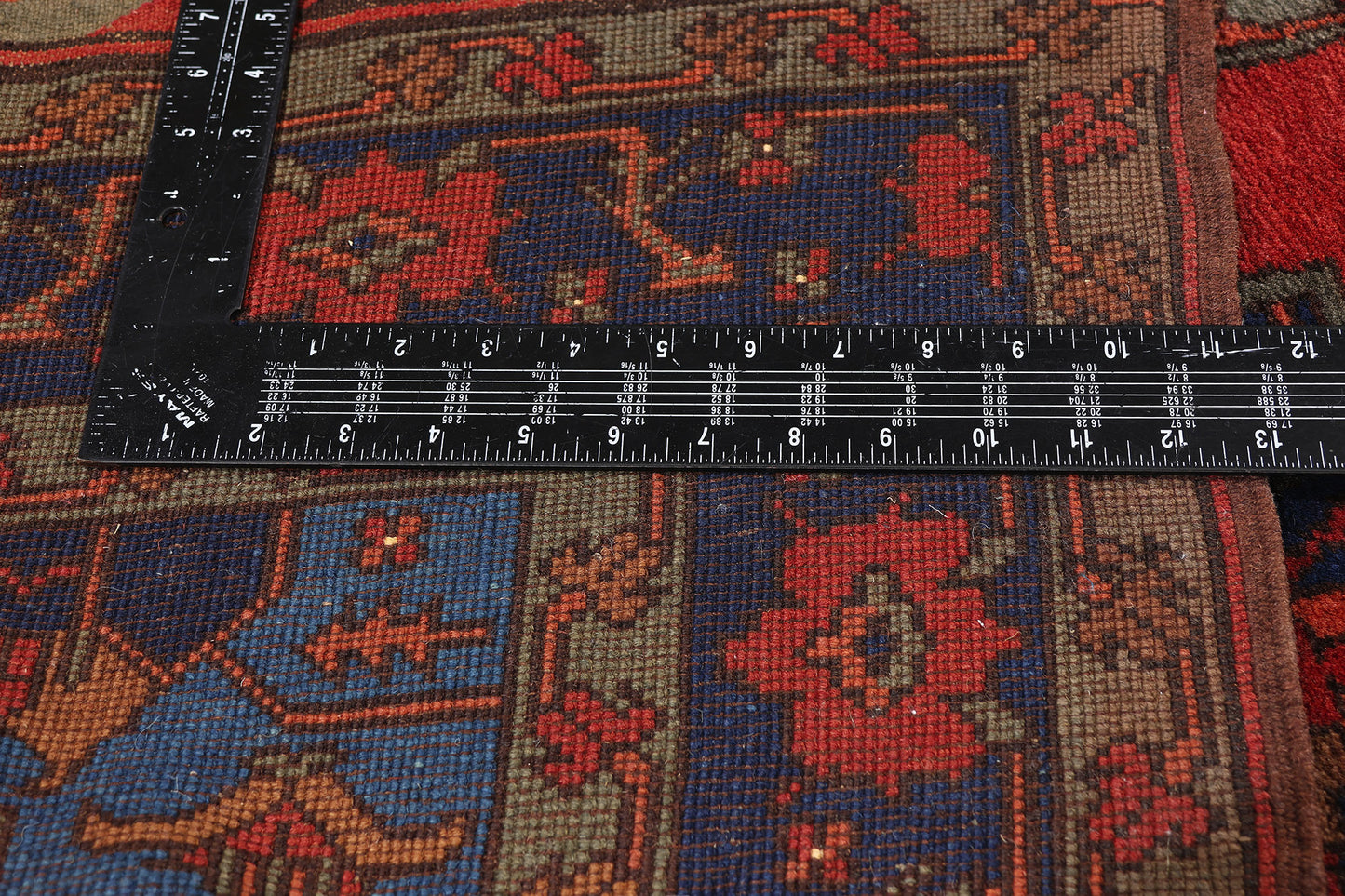
- Pile Height: 0.22 of an inch.
- Date: 1920's. Early 20th Century.


